
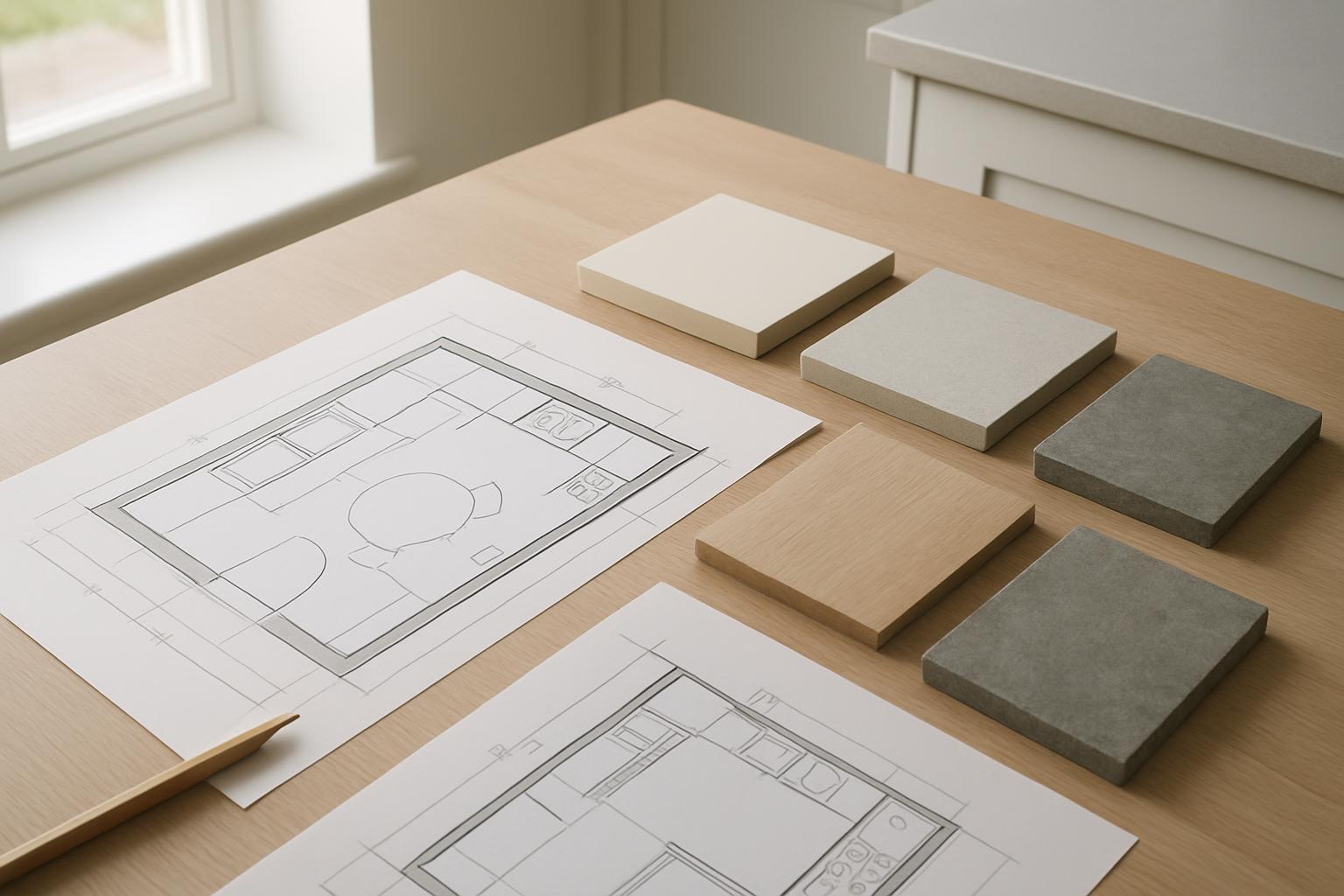
Rigid vs Flat-Pack Kitchens: What Is the Actual Difference?
Most people don’t realise the differences between rigid and flat-pack kitchens until they start planning a new kitchen. The choice affects cost, installation, and longevity.
A rigid kitchen comes with pre-assembled carcasses. These are the cabinets and units that arrive ready to be fitted. This is often seen as the higher-end option. It’s generally more robust and durable. The construction is done in a factory with proper machinery. The result is usually a sturdier kitchen that can withstand daily use.
Meanwhile, a flat-pack kitchen requires assembly on-site. You get the pieces in a box and build them up. Think of it as the furniture equivalent of buying from IKEA. It’s not all bad news, though. There’s a wide range of quality here, from budget-friendly options to surprisingly good mid-range choices.
Cost is a major factor in the rigid vs flat-pack kitchen debate. Rigid kitchens are generally more expensive. You’re paying for someone else to do the hard work of assembly. In contrast, flat-pack kitchens are cheaper. You’re trading money for time as they require more effort to assemble.
Fitters usually prefer rigid kitchens. They come ready to install, saving time on the job. If you’re hiring a professional, they might nudge you towards a rigid option. However, a competent fitter can do a decent job with a flat-pack kitchen, especially if the quality is good.
Longevity is where the rigid kitchen often wins. Pre-assembled units tend to last longer. This is due to the precise factory assembly and stronger joints. Flat-pack kitchens can last, but they require careful assembly and decent materials. If you’re planning to stay in your home for a long while, investing in a rigid kitchen might be worth it.
Before you make a decision, visit some local kitchen showrooms. You can explore a variety of options, whether you’re near kitchen showrooms in Lichfield or kitchen showrooms in Southend-on-Sea. Seeing the quality in person can clarify your choice.
There’s a spectrum of quality within both rigid and flat-pack kitchens. Not all rigid kitchens are top-of-the-line, and not all flat-packs are flimsy. It’s essential to do your research and perhaps even consult an expert at one of our kitchen showrooms in Amersham.
For more detailed advice, the KBSA has a wealth of information on choosing the right kitchen for your needs, which you can explore here.
What’s the main difference between rigid and flat-pack kitchens?
The primary difference is that rigid kitchens come pre-assembled, while flat-pack kitchens require on-site assembly.
Are rigid kitchens always better quality?
Not always. Rigid kitchens generally offer higher durability, but there are quality options in both categories.
How much more expensive is a rigid kitchen?
A rigid kitchen can cost 20-30% more than flat-pack options, depending on the materials and design.
Will a fitter charge more to install a flat-pack kitchen?
Possibly. A flat-pack kitchen might take longer to assemble, leading to higher labour costs.
To see a range of kitchens and get expert advice, visit our kitchen showrooms in Lichfield.