
What Size Extractor Fan Does a Kitchen Actually Need?
Choosing the right kitchen extractor fan size can be a bit of a minefield. Many people get this wrong, which leads to poor extraction and lingering odours. The honest answer is to use a simple formula: an extraction rate of at least ten times your kitchen’s volume per hour.
To put it in numbers, if your kitchen is 4m long, 3m wide, and 2.5m high, the volume is 30 cubic metres. You’d want an extractor fan that can handle at least 300m3/h. But here’s the catch: the minimum for most kitchens is actually 600m3/h. This ensures that even during a heavy cooking session, the air is properly refreshed.
Now, there’s a big difference between ducting and recirculating extractors. Ducted systems vent the air outside, which is far more efficient. Recirculating systems filter the air and send it back into the kitchen. While they’re easier to install, they never perform as well as ducted systems. If you have a choice, go for ducting every time.
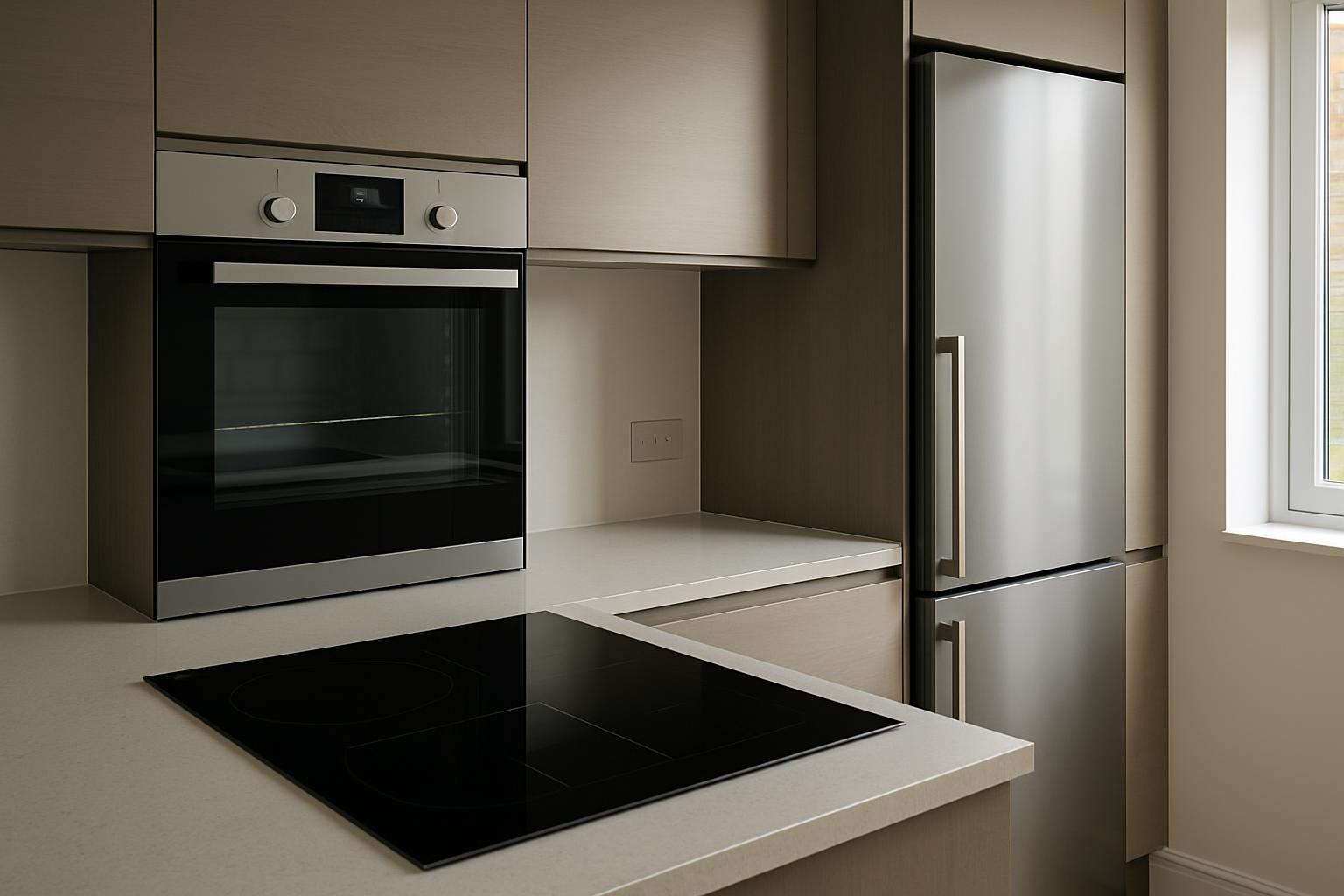
Placement is another factor many overlook. The extractor fan should ideally be positioned directly above the hob. This ensures that it captures steam and odours right at the source. For those planning a visit to our kitchen showrooms in Harrogate, our designers can help you with bespoke advice on positioning and installation.
It’s also worth knowing that the performance of ducting systems can vary. The length and number of bends in the ductwork can affect the fan’s efficiency. Generally, the shorter and straighter the duct, the better it will perform. If you’re unsure, have a chat with a professional. When visiting our kitchens in Nottingham showroom, we can offer practical advice based on real-world installations.
One more tip: check the noise levels. Some fans sound like a jet engine at full power. Look for something around 60 decibels or less if you want peace and quiet. This is especially important in open-plan spaces where the kitchen is part of the living area.
Understanding Extraction Rates
The extraction rate of a fan is crucial. As mentioned, you need a minimum of ten times the kitchen volume per hour. But don’t stop there. If you love cooking or have a particularly large space, go higher. A more powerful fan means less grease and steam sticking around. Plus, it helps protect your kitchen surfaces over time. If you’re visiting our kitchen showrooms in Sheffield, we can demonstrate different models and their capabilities.
Ducting Versus Recirculating
Let’s talk about ducting versus recirculating. A ducted fan is the gold standard. It moves air directly outside, which means better performance and less maintenance. Recirculating fans, on the other hand, need regular filter changes and aren’t as effective at removing moisture. This can lead to condensation issues.
In my experience, if you can manage the installation of ducting, do it. It might be more costly upfront, but the benefits in terms of air quality and energy efficiency are worth it. For an in-depth look at the pros and cons, visit Homebuilding’s guide on kitchen extractor fans.
Optimal Positioning for Efficiency
The position of your fan is as important as its size. Place it directly over the hob for the best results. This way, steam and smoke don’t have a chance to disperse into the room. If your hob is against a wall, a wall-mounted fan is your best bet. For island hobs, a ceiling-mounted extractor is ideal. Plan your kitchen layout accordingly to maximise the fan’s efficiency.
How do I calculate my kitchen’s volume?
Multiply the length, width, and height of your kitchen in metres. That gives you the volume in cubic metres.
Can I use a recirculating fan if I can’t install ducting?
Yes, but be aware that it won’t perform as well. You’ll need to change the filters regularly to maintain efficiency.
What if my kitchen is open-plan?
Treat the open-plan area as your kitchen when calculating the volume. You may need a more powerful fan.
How often should I replace my extractor fan?
With proper maintenance, a good quality fan should last 10-15 years. Check the manufacturer’s guidelines for specifics.
If you’re planning a kitchen renovation and need further guidance, visit our kitchens in Nottingham for tailored advice and to view our latest designs.