
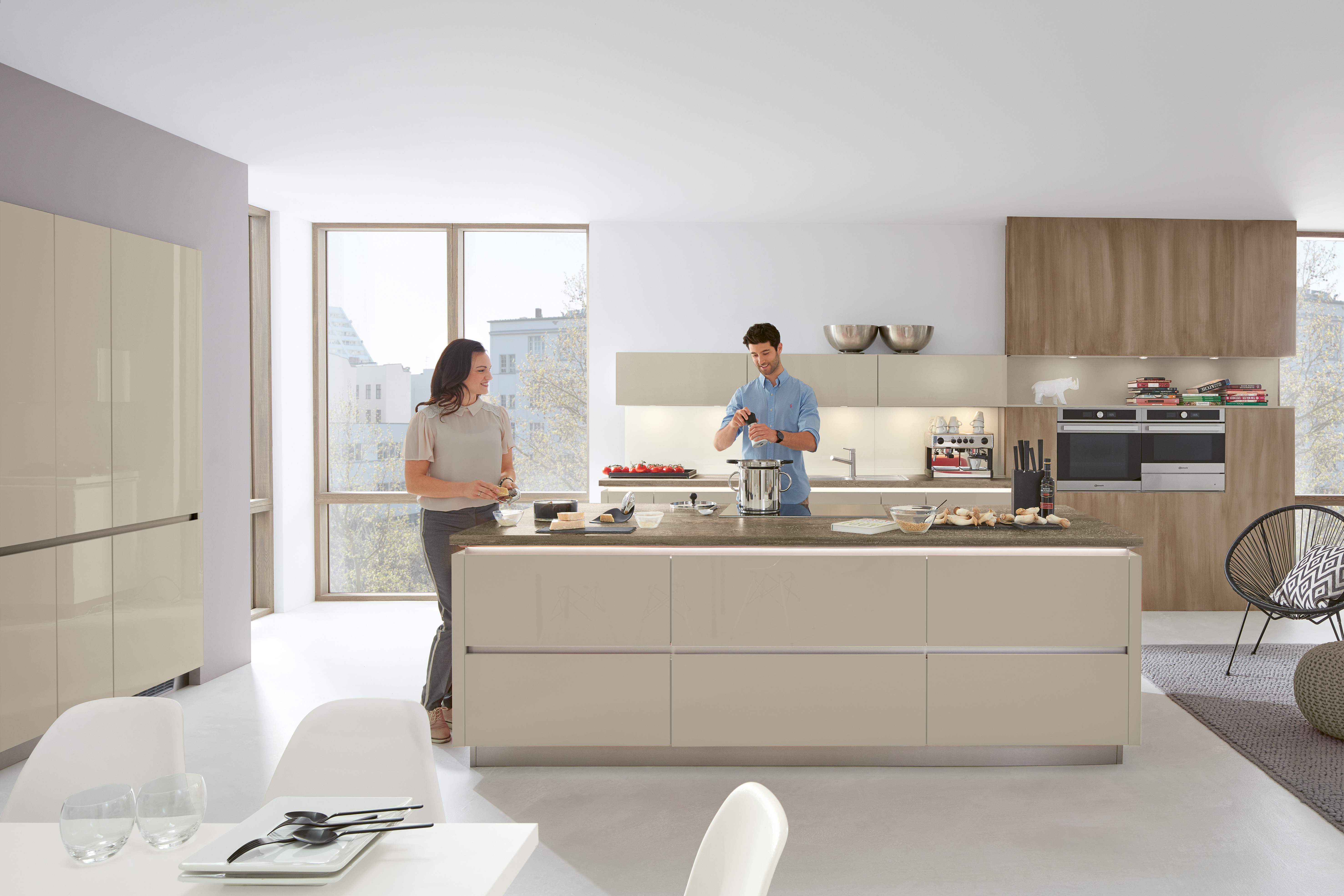
A handleless kitchen takes the principles of modern design to their logical conclusion. By removing the handle, the single most prominent hardware element on a kitchen door, the cabinetry becomes a continuous surface. The visual result is a kitchen that reads as a single architectural composition rather than a collection of units. Clean, deliberate and surprisingly practical to live with.
How handleless kitchens work
There are several mechanisms that make a handleless kitchen function without traditional pulls or knobs. The most common is the J-pull or G-profile: a recessed rail integrated into the top or side of each door, which provides a natural finger grip without interrupting the flat face of the cabinetry. Push-to-open or tip-on systems are used for appliance housing and areas where even a rail would intrude on the design. Slim aluminium rails running the full width of the cabinetry are a third option, popular where a horizontal line is desirable.
Each approach has different visual implications. The J-pull produces the cleanest facade. Aluminium rails introduce a subtle horizontal rhythm. Push-to-open is best reserved for specific cabinets rather than the whole kitchen, as the mechanism requires more precise alignment.
Materials and finishes
Handleless kitchens are most commonly finished in matte lacquer, high gloss, or textured foil. Matte lacquer is the most popular: it has a smooth, consistent surface that is easy to maintain and available in any colour. High gloss amplifies light and suits contemporary interiors where a more dramatic effect is wanted. Textured surfaces, including fine-grain woodgrain effects, offer a more tactile alternative that softens the rigour of the handleless form.
Door materials for handleless kitchens tend toward rigid, stable substrates. MDF and HDF are standard, as these take a painted or wrapped finish consistently across large door areas without telegraphing movement or variation. Solid timber doors are less common in handleless designs.
Layout considerations
Handleless kitchens look their best when the cabinetry runs uninterrupted. Long linear layouts, island configurations and full-height cabinetry walls all suit the style well. Breaks in the run, cooker hoods, windows, corners, require careful detailing to maintain the visual continuity. This is one reason why precise measurement and detailed planning are especially important in a handleless kitchen: the margin for inconsistency is smaller when the design relies on flat, continuous surfaces.
Worktops in handleless kitchens typically continue the clean approach: waterfall edges that drop vertically to the floor, minimal upstands, and integrated sinks that sit flush with the surface. Quartz and sintered stone are the most common choices.
How we work
The Kitchen & Bath Co designs and supplies handleless kitchens across the UK. We work entirely by phone and video call. There are no showrooms, which keeps our costs down and our prices competitive. Our designers produce detailed CAD drawings before anything is manufactured, so you can see exactly how your kitchen will look before committing. Delivery is free to any mainland UK address, and you arrange your own local fitter. Contact us for a free, no-obligation consultation.